Category: Air Circulation
 October 1, 2026

Summer’s over, the windows are closing, and the furnace is about to kick on for the first time in months. It’s easy to think of fall as a cozy, low-maintenance season — but it’s actually one of the more demanding times of year for the air inside your home.
As temperatures drop, most people seal up their homes to conserve heat: windows shut, doors closed, weatherstripping checked. That’s smart for your energy bill, but it also means the fresh-air exchange that happened naturally all summer largely stops. Whatever pollutants are generated indoors — dust, pet dander, VOCs from cleaning products, cooking byproducts — no longer have anywhere to go, negatively affecting the air inside your home.
A few fall-specific factors compound the problem:
None of this is dramatic on its own, but together it means the air inside your home can get noticeably worse in the fall than the air in the same home during summer, when windows are open more often.
Because fall works against natural airflow, mechanical ventilation becomes more important, not less. The EPA’s updated indoor air quality guidance highlights ventilation as one of the most cost-effective ways to improve indoor air — and notes that people spend about 90% of their time indoors, where poor air quality has an outsized impact on health.
Here’s how different types of fans fit into a fall air-quality strategy:
Exhaust fans (bathroom and kitchen)
These are your first line of defense against localized moisture and pollutants. Bathroom fans should run during and for 15–20 minutes after a shower to pull out humidity before it can settle into walls or ceilings. Kitchen range hood fans do double duty — clearing cooking byproducts and moisture from boiling water, which becomes more relevant as fall means more baking and simmering.
Whole-house and window fans
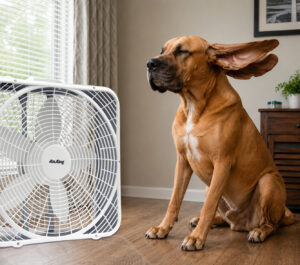
Even in cooler weather, there are still stretches of mild fall days worth taking advantage of. Running a window fan for even 15–30 minutes on a mild afternoon lets you flush out stale indoor air and bring in fresh air without letting the house lose all its heat.
HVAC/furnace fan circulation
Running your furnace’s fan periodically — even without heat — helps circulate air through your filtration system rather than letting it sit stagnant in corners and closed-off rooms. This is also a good moment to swap in a fresh filter, since a clogged one recirculates the dust the system just stirred up rather than trapping it.
The EPA’s broader guidance frames this as a layered approach: combining ventilation strategies like opening windows and doors with filtration upgrades, portable air cleaners, and running exhaust and window fans to reduce airborne particles works better than relying on any single fix.
Fall’s instinct — seal up, warm up, hunker down — is exactly what makes ventilation more important, not less. A few minutes a day of running the right fans at the right times can meaningfully offset the pollutant buildup that comes with a tightly closed house. It’s a small habit with an outsized payoff for comfort and health through the season. To learn more about Air King exhaust fans, including models with built-in humidity sensors, click on the exhaust fan link at the top of the page. For more information about Lasko Brands air purifiers, visit the Guardian Technologies site.